

A Tiny Chip, A Lifetime of Security: What to Expect During Your Pet’s Microchipping Appointment
At Family Pet Hospital in Mapleton, Utah, we understand that your pet is part of your everyday life, whether it’s morning walks, weekend adventures, or quiet evenings at home. One of the simplest ways to protect that bond is through microchipping. While many pet owners have heard of it, it is still common to wonder what actually happens during the appointment and what steps follow.
If you are considering microchipping your dog or cat, here is a complete guide to the process so you can feel confident from start to finish.
What Is a Pet Microchip?
A pet microchip is a small identification device placed just beneath your pet’s skin. About the size of a grain of rice, it contains a unique identification number that is linked to your contact information in a secure database.
Microchips are not GPS trackers and do not provide live location updates. Instead, they act as a permanent form of identification. If your pet is ever lost and taken to a veterinary clinic or shelter, a scanner can detect the microchip and read its ID number. That number is then used to access your contact details and reconnect you with your pet.
While collars and tags are still important, they can fall off or become unreadable. A microchip provides a reliable backup that stays with your pet for life.
What Happens During a Microchipping Appointment?
Microchipping is a quick and routine procedure that can often be completed during a regular visit. At Family Pet Hospital, we focus on making the experience smooth and comfortable for both you and your pet.
Initial Wellness Check
Your appointment will begin with a brief exam to make sure your pet is healthy and ready for the procedure. This is also a great time to ask any questions.
Microchip Preparation
Each microchip comes preloaded in a sterile applicator and is ready for safe placement. The process is designed to be efficient and hygienic.
Placing the Microchip
The microchip is inserted just beneath the skin, typically between the shoulder blades. The process is very similar to a routine vaccination. A small needle is used to place the chip quickly and safely.
Verification Scan
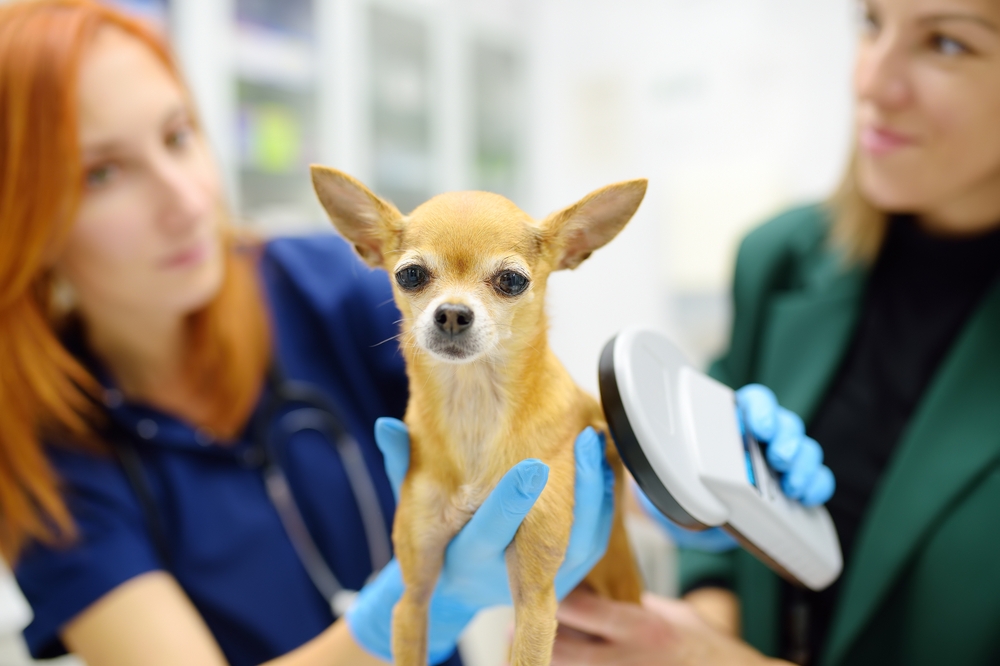
After placement, the microchip is scanned right away to confirm it is working properly and that the ID number can be read clearly.
The entire process takes only a few minutes and does not require anesthesia.
Does Microchipping Hurt My Pet?
This is one of the most common concerns pet owners have. The procedure is very well tolerated by most pets.
The sensation is similar to a vaccine. Your pet may feel a quick pinch during insertion, but the discomfort is brief. Many pets show little to no reaction at all.
Our team uses gentle handling techniques to help keep your pet calm and relaxed throughout the appointment, making the experience as stress free as possible.
What Happens After the Microchip Is Implanted?
Once the microchip is placed, there are a few important steps to complete so it works effectively.
Registering the Microchip
The microchip itself only contains an identification number. Your personal contact information must be linked to that number through registration. Without registration, the microchip cannot help reunite you with your pet.
You will receive instructions on how to complete this step, and our team can help guide you if needed.
Receiving Your Pet’s Information
You will be given your pet’s microchip number and related documentation. Keeping this information accessible is important.
Routine Microchip Checks
During future visits, your pet’s microchip can be scanned to confirm it is still functioning properly and remains in place.
Do I Need to Do Anything After My Pet Is Microchipped?
Yes. While the procedure itself is simple, a few follow up steps are essential.
Register the Microchip Immediately
This is the most important step. If the microchip is not registered, it cannot be used to contact you.
Keep Your Contact Information Updated
If you move or change your phone number or email, make sure your pet’s microchip profile is updated. Accurate information is key to a successful reunion.
Monitor the Implant Area
Most pets do not require special aftercare. You can briefly check the area for any swelling or irritation, although this is uncommon.
Use Visible Identification
Microchipping should be used alongside a collar and ID tag. Visible identification allows for faster contact if your pet is found nearby.
Why Microchipping Matters in Mapleton
Mapleton offers a beautiful balance of neighborhood living and open outdoor space. While that makes it a great place for pets, it also creates opportunities for them to wander.
Even well trained pets can slip through a gate, chase after something, or become startled. Microchipping provides a dependable safety net in these situations.
Pets with microchips are significantly more likely to be reunited with their owners compared to those without. It is one of the most effective ways to ensure your pet has a path back home.
A Quick Visit That Lasts a Lifetime
Microchipping is a simple step that provides lasting peace of mind. In just a few minutes, you can give your pet a permanent form of identification that stays with them for life.
At Family Pet Hospital in Mapleton, we are committed to making every visit comfortable, informative, and efficient. Our team is here to answer your questions, guide you through registration, and ensure your pet receives high quality care.
If your pet has not been microchipped yet, now is a great time to take that step. Contact Family Pet Hospital today to schedule your appointment and give your pet a lifelong connection back home.