

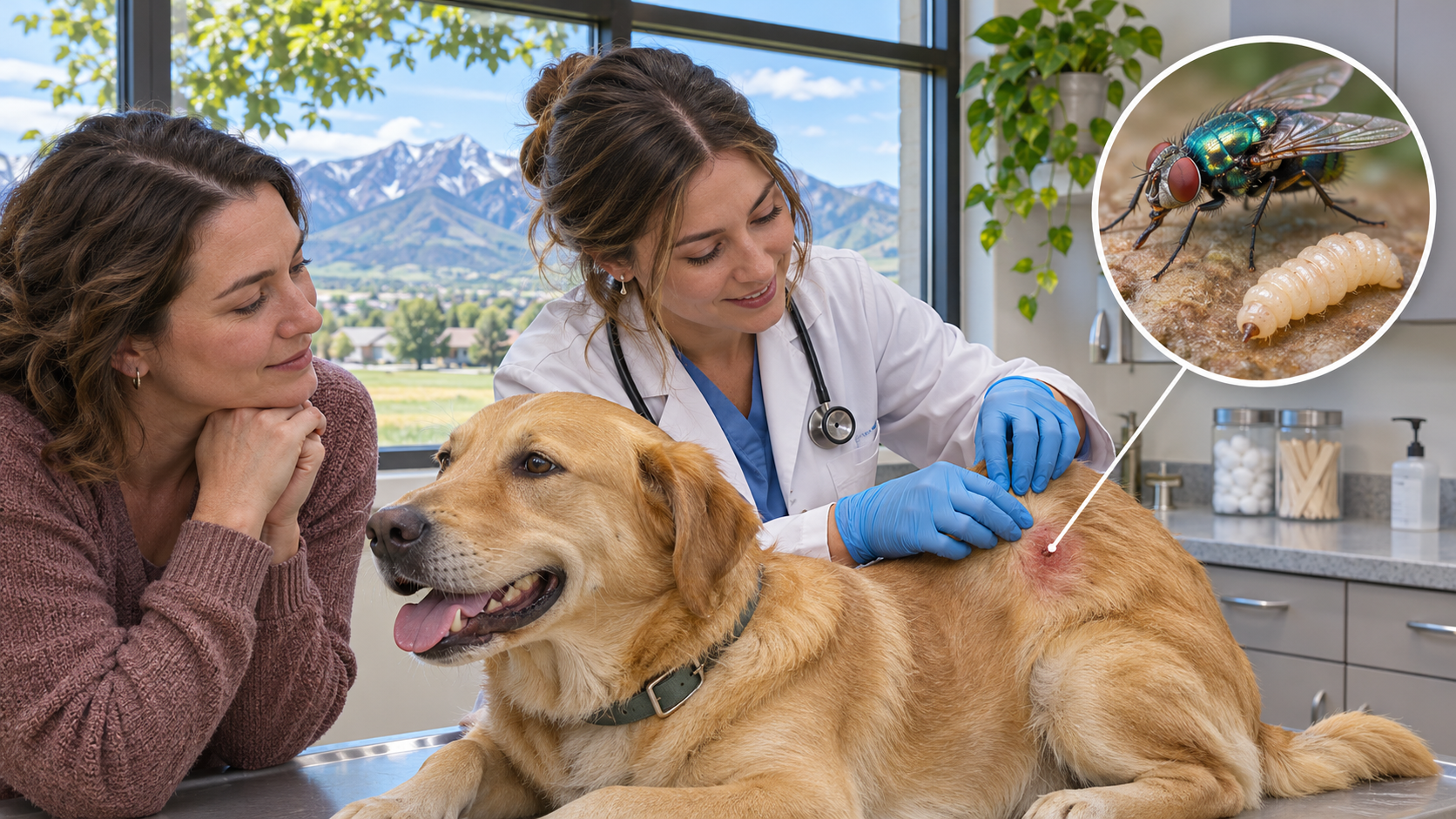
Hearing about a new animal health concern can bring up plenty of questions. At Family Pet Hospital in Mapleton, we want pet owners to have clear, practical information.
What exactly is New World screwworm?
It’s a parasitic fly that lays eggs in wounds or body openings. The larvae feed on living tissue and can cause serious damage in dogs, cats, and other warm-blooded animals.
How would I know if my pet has it?
Watch for wounds that grow or fail to heal, visible maggots, swelling, foul odors, bloody discharge, or signs of pain. Pets may also lick excessively, shake their heads, become unusually tired, or lose interest in food.
Can I treat it myself?
No. Suspected infestations need immediate veterinary attention. Avoid removing larvae at home. Veterinarians must also follow disease-reporting requirements.
Should my pet continue taking flea and tick medication?
Yes. Year-round parasite protection remains important. Some commonly used medications have received FDA authorization for screwworm treatment, although not every product prevents infestations.
What if we’re traveling?
Certain destinations require a recent veterinary examination, health certificate, specific screwworm documentation, or an entry permit. California has additional restrictions for pets arriving from designated affected areas. Check the current California requirements before traveling.
Have more questions? Family Pet Hospital is here to help Mapleton families make informed decisions about their pets’ health.
Want to Learn More?
We encourage pet owners to use reliable sources when researching New World screwworm. The USDA offers current updates, the FDA explains medication options, and the California Department of Food and Agriculture provides important information about travel restrictions.