

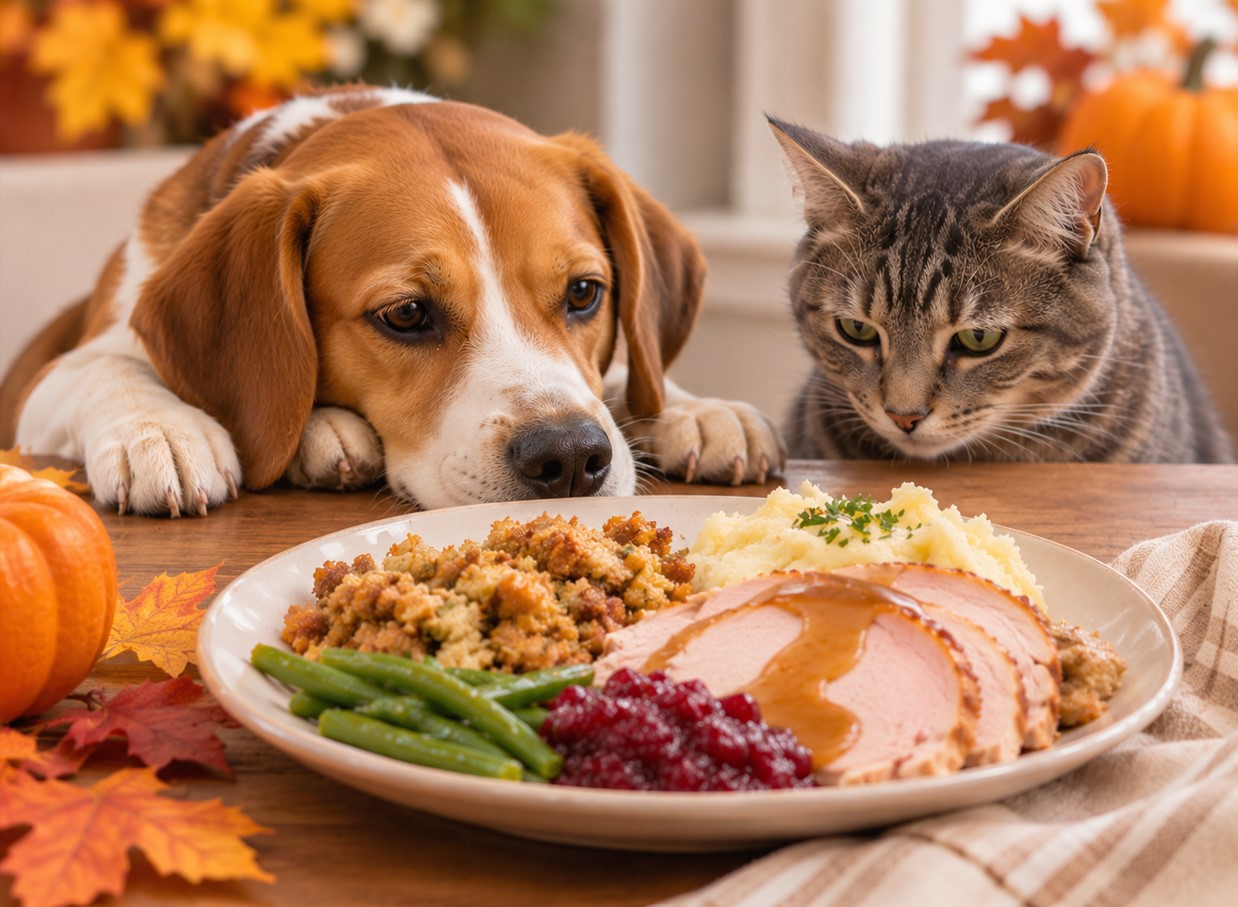
Thanksgiving is one of those holidays where everyone seems to gather in the kitchen. Someone’s checking the turkey, someone’s sneaking a taste of the mashed potatoes, and there’s usually a dog nearby hoping to benefit from all the activity.
If you have a cat, they might be watching from a distance, waiting for the perfect opportunity to investigate what’s on the counter.
Our pets are part of the family, so it’s natural to want to include them in Thanksgiving dinner. But before you share a bite of your favorite holiday dish, it’s important to remember that not everything we enjoy is safe for dogs and cats.
At Family Pet Hospital in Mapleton, UT, we want local pet owners to celebrate Thanksgiving with confidence.
Understanding which foods can make pets sick and knowing what to do after an accidental ingestion can help keep your holiday focused on family instead of unexpected veterinary visits.
Why Thanksgiving Food Can Be Hard on Pets
Think about how different Thanksgiving dinner is from your pet’s normal diet.
Most dogs and cats eat relatively consistent meals throughout the week. Suddenly, Thanksgiving arrives with buttery side dishes, fatty meats, sweet desserts, and unfamiliar ingredients.
Even foods that aren’t toxic can cause stomach upset when introduced too quickly.
Other ingredients, such as onions, garlic, chocolate, and raisins, can cause much more serious complications.
The risk depends on the food involved, how much your pet eats, their size, and their overall health.
Can Your Dog Have a Little Turkey?
Yes, but preparation matters.
Plain, fully cooked turkey meat without bones, skin, or seasoning can be a suitable occasional treat for many healthy dogs and cats.
The trouble begins when turkey is prepared with butter, garlic, onions, or rich sauces.
Turkey skin contains a significant amount of fat, which may contribute to vomiting, diarrhea, or pancreatitis.
Cooked turkey bones are another concern. They can splinter into sharp pieces, potentially causing choking, digestive injuries, or intestinal blockages.
If you’d like to share turkey with your pet, set aside a small portion before seasoning the rest.
Thanksgiving Side Dishes That Should Stay Off the Pet Menu
Some holiday side dishes contain ingredients that are particularly harmful to animals.
- Stuffing: Often contains onions, garlic, butter, and seasonings. Onions and garlic can damage red blood cells in dogs and cats, potentially causing anemia.
- Mashed Potatoes: Plain cooked potatoes aren’t inherently toxic to dogs, but holiday versions often contain butter, cream, salt, and garlic.
- Green Bean Casserole: Green beans themselves are generally safe in small amounts, but creamy sauces and fried onions make the casserole a poor choice.
- Sweet Potato Casserole: Plain cooked sweet potatoes may be suitable for some pets, but butter, sugar, and marshmallow toppings should be avoided.
- Gravy: Often contains significant amounts of fat, sodium, and seasonings that can irritate the digestive system.
The safest approach is to offer plain, unseasoned foods rather than sharing prepared dishes from the table.
Desserts Are Better Left to Humans
Thanksgiving desserts are another common source of accidental pet poisoning.
Chocolate contains theobromine and caffeine, substances that can affect the heart and nervous system of dogs and cats.
Dark chocolate and baking chocolate are particularly concerning.
Grapes and raisins, sometimes found in baked goods or holiday salads, can cause acute kidney injury in dogs. There is no reliably safe amount.
Some sugar-free desserts contain xylitol, a sweetener that can cause dangerously low blood sugar and liver injury in dogs.
Even desserts without toxic ingredients may be too rich for pets.
Pumpkin pie, for example, often contains sugar, dairy, and spices. Plain, unsweetened pumpkin is generally a better option.
What About Cats?
Cats have different nutritional needs than dogs, but they’re still vulnerable to many Thanksgiving food hazards.
Cats are particularly sensitive to onion and garlic toxicity.
They may also experience vomiting or diarrhea after eating fatty or unfamiliar foods.
Because cats are obligate carnivores, they don’t need the variety of vegetables and side dishes that people enjoy.
If your cat wants to participate in Thanksgiving, a small amount of plain, cooked turkey is generally a more appropriate option.
Avoid seasoned meat, bones, gravy, and dairy-heavy dishes.
What to Do If Your Pet Eats Something Dangerous
If your dog or cat gets into Thanksgiving food, start by identifying exactly what they consumed.
Check the ingredients, estimate how much they ate, and note approximately when it happened.
Contact your veterinarian for guidance.
If your pet ate chocolate, grapes, raisins, xylitol, or another potentially toxic ingredient, don’t wait for symptoms before calling.
You can also contact ASPCA Animal Poison Control at (888) 426-4435 or Pet Poison Helpline at (855) 764-7661.
Consultation fees may apply.
Do not induce vomiting or give home remedies unless specifically instructed by a veterinary professional.
Signs Your Pet Needs Veterinary Attention
Food-related illness may cause vomiting, diarrhea, drooling, loss of appetite, abdominal pain, or unusual tiredness.
More serious symptoms include tremors, seizures, difficulty breathing, collapse, or severe abdominal swelling.
Some toxicities cause delayed symptoms, so a pet acting normally immediately after eating something harmful isn’t necessarily safe.
If your pet is experiencing severe symptoms, seek emergency veterinary care.
A Little Planning Goes a Long Way
Before Thanksgiving dinner, remind guests not to share table scraps.
Keep dangerous ingredients out of reach, secure trash containers, and refrigerate leftovers promptly.
You can also prepare a small pet-safe treat ahead of time.
For pets with sensitive stomachs, allergies, or prescription diets, their regular food may be the safest choice.
And remember, your pet doesn’t need to eat everything you’re eating to enjoy the holiday.
Happy Thanksgiving From Family Pet Hospital
Thanksgiving is about spending time with the people and pets who make life special.
With a few simple precautions, your dog or cat can enjoy the celebration without unnecessary health risks.
At Family Pet Hospital in Mapleton, UT, we’re here to help local families make informed decisions about their pets’ nutrition, wellness, and safety.
If your pet eats something concerning or develops unusual symptoms, contact our veterinary team for guidance.
For suspected poisoning or severe symptoms, seek emergency veterinary care immediately.
Here’s to a wonderful Thanksgiving filled with good food, happy memories, and healthy pets!